When most people hear Afghanistan, they picture rugged mountains, legendary hospitality, and perhaps the world’s strongest tea. What they often don’t expect is a portfolio of heritage sites so impressive that even UNESCO had to stop and say, “Wow, nice work.” Afghanistan currently boasts two official UNESCO World Heritage Sites and four sites on the Tentative List—and each of them carries enough history, drama, and architectural brilliance to fuel a Netflix series.
Let’s take a tour to Afghanistan with Let’s Go Afghanistan. Buckle up—preferably in a caravan, for historical accuracy.
UNESCO World Heritage Sites in Afghanistan
- The Minaret of Jam: The Tower That Refuses To Fall Over (For 800 Years!)
Rising a dramatic 65 meters into the Afghan sky, the Minaret of Jam stands proudly in the remote Ghur Province—basically the “middle of nowhere” but with better views. Built in 1194 by the Ghurid sultan Ghiyas-od-din, this brick masterpiece is adorned with mesmerizing geometric carvings and a shimmering turquoise Kufic inscription that screams: medieval Afghan architecture was elite (Minaret of Jam, n.d.).
Why UNESCO Loves It
- It influenced architectural styles as far as India—including Delhi’s iconic Qutb Minar.
- It’s a masterpiece of Islamic ornamentation.
- It’s a rare surviving symbol of the mighty Ghorid civilization (Minaret of Jam, n.d.).
The structure consists of four cylindrical shafts stacked like a historical Jenga tower—except this one miraculously hasn’t toppled for eight centuries. It also likely marked the Ghurid summer capital of Firuzkoh, and nearby archaeological finds include Hebrew-inscribed stones and remnants of fortresses (Minaret of Jam, n.d.).
- The Cultural Landscape & Archaeological Remains of the Bamiyan Valley
Take a beautiful valley in the Hindu Kush, carve two giant Buddhas into the cliffs (55m and 38m), add hundreds of caves filled with murals, monasteries, shrines, and fortified Islamic structures—and you get the Bamiyan Valley, a true crossroads of cultures for over a millennium (Bamiyan Valley, n.d.).
Why UNESCO Loves It
- It’s the defining example of Gandhara Buddhist art.
- It represents centuries of cultural exchange.
- It was a major Buddhist pilgrimage center.
- Its artistic legacy survived despite tragic destruction (Bamiyan Valley, n.d.).
The site tells the story of Buddhism flourishing along the Silk Road, blending Indian, Hellenistic, Roman, Sasanian, and Islamic influences. And yes—this valley is also where the Taliban destroyed the two iconic giant Buddha statues in 2001, an act that shocked the world (Bamiyan Valley, n.d.).
UNESCO Tentative List of Afghanistan
These next four sites are basically heritage candidates preparing for their “UNESCO audition.” And honestly—they deserve a standing ovation.
- The Ancient City of Herat: The Timurid “Hollywood of Architecture”
Herat has been everything: A Persian stronghold, an Achaemenid prize, a Ghorid conquest, a Timurid renaissance hub, and—more recently—a reminder that urban planning was better 600 years ago (Herat, n.d.).
Its highlights include:
- Qala-e Ikhtyaruddin, a citadel possibly founded by Alexander the Great himself
- The Musalla Complex, once described as “the most beautiful example in colour in architecture ever devised by man”
- Masjid-e Jami, featuring rare Ghorid tilework
- The Gozargah complex, home to the stunning Haft Qalam sarcophagus (Herat, n.d.)
Herat was also a cultural powerhouse, producing legends like Jami, Behzad, and philosopher-poets that continue to shape Central Asian identity.
- The City of Balkh: “Mother of Cities” and Proud Overachiever
Reputedly older than most civilizations’ bedtime stories, Balkh once rivaled Babylon and served as a spiritual center of Zoroastrianism (Balkh, n.d.).
Today you can still see:
- The massive earthen city walls (10 km long!)
- The Bala Hissar fortress
- The Haji Piyada Mosque, one of the earliest Islamic buildings in the region (Balkh, n.d.)
It hosted Buddhist monasteries, Islamic scholars, philosophers like Ibn Sina, and countless travelers who all agreed: Balkh was lit.
- Band-e-Amir National Park: Afghanistan’s Natural Eye Candy
Imagine six sapphire-blue lakes linked by natural travertine dams, surrounded by cliffs. That’s Band-e-Amir—Afghanistan’s first national park and one of the world’s most beautiful natural formations (Band-e-Amir, n.d.).
- Bagh-e Babur: Where Emperors Gardened Their Feelings
Perched on terraced slopes overlooking Kabul, Bagh-e Babur is the 16th-century garden where Zahir-ud-Din Muhammad Babur, founder of the Mughal Empire, chose to be buried (Bagh-e Babur, n.d.).
Babur loved gardening so much he designed at least 10 gardens in Kabul himself—king by day, landscape architect by night.
Through centuries, the garden:
- Was expanded by Mughal emperors
- Was altered dramatically by Amir Abdur Rahman
- Was “Europeanized” by King Nadir Shah
- Was excavated and restored after 2003 by AKTC and the German Archaeological Institute (Bagh-e Babur, n.d.)
It remains one of the finest surviving examples of an Islamic/Persian chahar-bagh garden—geometry, symbolism, waterworks, terraces, and all.
Conclusion
Afghanistan’s heritage isn’t just old—it’s epic. From towering minarets in remote valleys to monumental Buddhas carved into cliffs, from ancient cities that trained philosophers to gardens fit for emperors, Afghanistan holds some of humanity’s greatest cultural achievements. These sites remind us that Afghan history isn’t merely long—it’s layered, global, artistic, intellectual, and breathtaking.
And honestly? Afghanistan deserves way more hype. Let’s Go Afghanistan
What Is New?
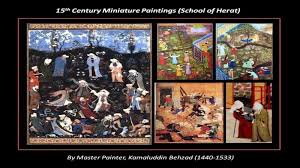
Kamaluddin Behzad: The Brush That Put Afghanistan Back on the World Map
The legendary miniature art linked to Ustad Kamaluddin Behzad- has now been officially placed on UNESCO’s Intangible Cultural Heritage List. Thanks to UNESCO’s global stamp, the art is expected to attract more cultural tourists and more attention.
With this addition, miniature art becomes Afghanistan’s twenty-third officially recognized intangible heritage element. Not bad for a country that has been painting history long before Instagram filters existed (UNESCO, 2025).
In short: Behzad didn’t just paint; he built a legacy that Afghanistan—and now the world—proudly protects.
References
Minaret of Jam. (n.d.). Description, history, cultural criteria, integrity, authenticity, and management details of the 12th-century Minaret of Jam and its surrounding archaeological remains.(https://whc.unesco.org/fr/list/211).
Bamiyan Valley. (n.d.). Cultural landscape and archaeological remains of the Bamiyan Valley, including Buddhist monuments, Islamic fortifications, destruction of Buddha statues, criteria, and conservation efforts.( https://whc.unesco.org/fr/list/208).
Herat. (n.d.). Historical overview and architectural heritage of the ancient city of Herat, including Timurid monuments, citadel, Musalla complex, Masjid-e Jami, and Gozargah.(https://whc.unesco.org/fr/listesindicatives/1927/).
Balkh. (n.d.). Historical account of the city of Balkh including Buddhist, Zoroastrian, Islamic, and Timurid remnants, architectural sites, and ancient city layout.(https://whc.unesco.org/fr/listesindicatives/1928/).
Band-e-Amir. (n.d.). Description of the natural lakes of Band-e-Amir National Park, geological formation, and tourism significance.( https://whc.unesco.org/fr/listesindicatives/1946/).
Bagh-e Babur. (n.d.). Historical, architectural, and cultural analysis of Bagh-e Babur, including Mughal history, excavations, Islamic garden traditions, and restoration efforts.(https://whc.unesco.org/fr/listesindicatives/5469/).
Reference:
AVA Press. (2025, December 11). Herat miniature world registration; A great honor for Afghanistan and a reminder of Herat’s cultural status. https://www.avapress.com/en/news/340354/herat-miniature-world-registration-a-great-honor-for-afghanistan-and-a-reminder-of-herat-s-cultural-status#:~:text=Officials%20of%20the%20Herat%20Information,Herat’s%20cultural%20and%20civilizational%20status
(2025). Behzad’s style of miniature art (Nomination No. 02267). UNESCO Intangible Cultural Heritage. https://ich.unesco.org/en/RL/behzad-s-style-of-miniature-art-02267
Let’s Go Afghanistan Team