What to Expect When Visiting an Afghan Home
Entering an Afghan house is not just about stepping through a doorway; it is an experience filled with warmth, respect, and centuries-old traditions. As you approach the entrance, the first thing you notice is the expectation that shoes are removed at the door. This simple act is more than cleanliness—it symbolizes respect for the home and the people living in it. Once your shoes are taken off, the host greets you warmly, ready to guide you inside. The journey into the heart of Afghan hospitality begins the moment you cross that threshold.
The host usually leads the guests to the guestroom, a place designed for comfort and social connection. The guestroom is often separated from the private areas of the house, maintaining a sense of privacy for the family, particularly for women. If men and women are visiting, they are generally seated in different rooms unless they are close relatives. Children, too, play an important role; they greet guests respectfully and, if they are close relatives, may even kiss the elders’ hands. The initial moments are filled with polite gestures, a quiet acknowledgment of the respect and dignity that define Afghan homes.
Once you enter the guestroom, you are immediately invited to sit. The best seat is always offered to the guest. In Afghan tradition, the highest or warmest spot in the room is considered the most honorable. Guests are never left alone; someone always stays nearby, ready to converse, tell stories, or share laughter. The atmosphere is welcoming, and the warmth of the home is matched by the warmth of the people. Even before any food is served, the engagement with the guests begins, highlighting the importance of human connection.
Almost immediately after sitting, tea is brought to you. Tea in Afghan culture is more than a drink—it is a symbol of hospitality and friendship. Alongside the tea, dried fruits such as almonds, walnuts, chickpeas, as well as cakes, cookies, and raisins, are served. Refusing tea is considered rude, as it implies a rejection of the host’s goodwill. Afghan hosts often refill tea cups without asking, showing their eagerness to ensure that guests feel completely cared for. Every sip of tea is accompanied by a sense of warmth, both from the beverage and the genuine attention of the host.
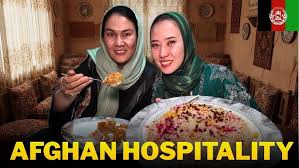
Before the main meal is served, a ritual of cleanliness and preparation takes place. Guests are brought an Aftabeh, a small container used to pour water, and a Lagan, a dish used to wash hands. This practice emphasizes hygiene and respect for the communal meal. Food is traditionally shared from one large dish, highlighting the Afghan value of togetherness. The guest always eats first, and the best portion is offered initially. Even if a guest declines, the host insists, demonstrating generosity and ensuring that no guest leaves without feeling fully honored.
Afghan meals are distinctive in their communal nature. Men and women generally sit separately, and children observe silence during elders’ speeches, showing respect. Interrupting elders is considered rude, and the privacy of women is deeply respected—male guests do not enter the kitchen, which is typically managed by mothers. The family environment carefully balances hospitality with respect for privacy. Curtains are adjusted for modesty, and the seating often consists of soft mattresses covered with matching sheets and cotton pillows, creating a harmonious and comfortable environment. Guests are encouraged to sit properly, with their feet not pointed toward others, further emphasizing respect in every gesture.
During the meal, guests are urged to eat more than once. Afghan people value generosity highly, and insisting that guests eat well is a way to show care and respect. Leftover food is treated with reverence and is never wasted. Meals are usually eaten with the right hand, reflecting cultural practices, as spoons and forks are not commonly used. The act of sharing food from a single dish strengthens bonds, creating a sense of unity and belonging. Bread, or naan, is never placed upside down, symbolizing respect for sustenance and tradition.
After the main meal, guests are offered fresh and dried fruits, sweets, and more tea. Salt and water are often served as symbols of friendship and strong connection, reinforcing the social and emotional ties between the host and the guest. These small but meaningful gestures reflect the core values of Afghan hospitality. Mothers typically control kitchen decisions, ensuring that every dish is prepared with care, while fathers handle guest relations, guiding the interaction and making sure the visit runs smoothly.
Afghan homes are filled with lively conversations, laughter, and storytelling. Loud voices do not indicate anger; instead, they reflect joy, happiness, and engagement. Arguments, if they occur, are similarly expressive but are rooted in cultural norms rather than conflict. Patience is expected from both guests and hosts, as time is devoted to conversation, sharing stories, and creating memories. Sudden visits are accepted warmly, demonstrating flexibility and generosity in hosting.
As the visit comes to a close, the process of saying goodbye is gradual. Guests are walked to the door, often with the host insisting on accompanying them, sometimes even offering transportation in the host’s car. Invitations to return are repeated, emphasizing that the home remains open for future visits. Every departure is handled with care, ensuring that the sense of respect, warmth, and connection remains until the very last moment.
In an Afghan home, the experience extends beyond mere hospitality—it is a walk through cultural values, social customs, and human warmth. The entire visit, from removing shoes at the door to saying goodbye, is guided by a sense of dignity and respect. Guests are treated with the utmost attention, offered comfort and nourishment, and included in conversations that are lively and engaging. The home itself is a space where privacy, tradition, and generosity intersect, creating an environment that feels welcoming yet respectful, warm yet structured.
The furniture, the seating arrangements, the tea, and the food are all carefully orchestrated to communicate care, honor, and attention to detail. Every action, from pouring tea to offering the best portion of food, is imbued with meaning. Afghan hospitality ensures that guests are not only fed and accommodated but also respected, appreciated, and engaged in a cultural experience that leaves a lasting impression. The ritual of hospitality, the emphasis on shared meals, and the respect for family hierarchy make a visit to an Afghan house a truly immersive experience.
Walking out of an Afghan house, a guest carries not only memories of food and conversation but also the intangible sense of respect, dignity, and belonging. The host’s careful guidance, the comfort of the guestroom, the generosity of meals, and the warmth of personal interaction all contribute to a memorable experience. Afghan homes are more than physical spaces; they are living representations of culture, tradition, and human connection. The visit leaves a lasting impression of a society that values respect, care, and genuine hospitality, making every guest feel honored and cherished.
In conclusion, visiting an Afghan home is an immersive cultural experience. From removing shoes at the entrance to the slow, respectful farewell at the door, every action is guided by tradition and respect. Afghan hospitality is more than welcoming guests—it is about creating a space where dignity, generosity, and connection coexist. Guests are treated as honored participants in a carefully orchestrated ritual of care, ensuring that every visit leaves a lasting impression. Whether it is the tea, the shared meals, the storytelling, or the attention to comfort and privacy, an Afghan home provides an unforgettable experience of warmth, respect, and cultural richness.
Let’s Go Afghanistan Team