
Museums of Afghanistan: Where History Refuses to Sit Quietly
Afghanistan’s museums are not the kind where history whispers politely from behind glass. Here, history talks back, sometimes loudly, sometimes emotionally, and often with a sense of stubborn survival. From ancient gold to modern memories of war, Afghan museums are less about dust and more about stories that refuse to disappear.
Afghanistan’s museums do more than preserve objects. They prove that history here is not finished speaking—and it has a lot to say. Let’s Go Afghanistan
National Museum of Afghanistan: Kabul
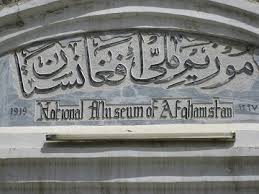
The heart of this story beats in Kabul, just across a small street from Darul Aman Palace, where the National Museum of Afghanistan has been standing its ground since 1919. Opened during the reign of King Amanullah Khan, the museum began its life modestly as a “Cabinet of Curiosities” before settling into its current home in 1931. Once counted among the finest museums in the world, it holds treasures that span centuries: ivory antiquities, relics from the Kushan Empire, early Islamic periods, and the famous Rabatak Inscription of King Kanishka, which survived the chaos of the 1990s like a true veteran (Wikipedia, n.d.).
Its archaeological collection reads like a traveler’s passport stamped by history itself: painted frescos from Dilberjin, sculptures and coins from Ai-Khanoum and Surkh Kotal, Roman glassware, Chinese mirrors, Indian ivories from Bagram, Buddhist sculptures from Tepe Sardar, and Islamic art from the Ghaznavid and Timurid periods discovered in Ghazni. Add to this a massive coin collection once reported to include 30,000 pieces, and you realize this museum does not collect history—it hosts it. Some of its most important artifacts even went on a world tour, visiting museums from Paris to London, patiently waiting to return home.
OMAR Mine Museum: Kabul
In Kabul again, but in a very different tone, stands the OMAR Mine Museum. Founded in 1994 by the Organization for Mine Clearance and Afghan Rehabilitation, this museum is serious, sobering, and necessary (Wikipedia, n.d.). With 51 types of land mines on display—safely deactivated—it educates visitors, especially school groups, on how to recognize and avoid unexploded ordnance. Alongside personal stories and mine-clearance accounts, the museum displays artillery, missiles, and Soviet military aircraft once used by the Afghanistan Air Force. Due to security concerns and damage from a 2019 attack, visits are only possible by appointment, making this museum as cautious as it is informative.
Jihad Museum: Herat
Travel west to Herat, and you encounter two very different yet connected spaces. The Jihad Museum, built in 2010, serves as both a memorial and an educational site (Wikipedia, n.d.). It honors the mujahideen who fought Soviet forces and remembers those who lost their lives. Inside, visitors move through exhibitions of weapons, a portrait hall of over 60 commanders, dramatic battle dioramas, and a large circular mural illustrating key moments in Afghan history.
Herat National Museum
Nearby, the Herat National Museum, established in 1925 by King Amanullah, tells a quieter but wounded story (Franke, 2008). Once home to over 3,000 objects, it suffered heavy losses during war. Reopened in 2004, it now displays about 1,000 archaeological and ethnographical items across 57 showcases, alongside a neighboring National Archive inaugurated in 2005.
Bamyan Museum and Cultural Center
Finally, in central Afghanistan, the Bamyan Museum and Cultural Center feels less like a building and more like a discovery. Carved into the ground along the ancient Silk Road, it blends into the landscape beneath the Buddha Cliffs. Visitors first encounter gardens, not walls. Rooftops double as viewing platforms, and the center itself becomes a meeting place where culture, landscape, and community quietly—and beautifully—intersect.
References
- Wikipedia contributors. (n.d.). National Museum of Afghanistan. In Wikipedia, The Free Encyclopedia. Retrieved December 13, 2025, from https://en.wikipedia.org/wiki/National_Museum_of_Afghanistan
- Wikipedia contributors. (n.d.). OMAR Mine Museum. In Wikipedia, The Free Encyclopedia. Retrieved December 13, 2025, from https://en.wikipedia.org/wiki/OMAR_Mine_Museum
- Coulleri, A. (2022, April 21). Bamyan Cultural Center / M2R Arquitectos. ArchDaily. Retrieved December 13, 2025, from https://www.archdaily.com/980475/bamyan-cultural-center-m2r-arquitectos
- Franke, U. (Ed.). (2008). National Museum Herat – Areia Antiqua Through Time. Deutsches Archäologisches Institut. Retrieved via Internet Archive from https://web.archive.org/web/20140428043743/http://www.dainst.org/en/project/afghanistan-herat-areia-antiqua-iii
- Wikipedia contributors. (n.d.). Jihad Museum. In Wikipedia, The Free Encyclopedia. Retrieved December 13, 2025, from https://en.wikipedia.org/wiki/Jihad_Museum
Let’s Go Afghanistan Team