Afghanistan Airports: History and Current Aviation Network
Because of Afghanistan mountainous geography, it has always faced serious transportation challenges. The country has no navigable rivers and no railway system, and road construction has been difficult and expensive. For this reason, aviation became an essential solution for mobility, communication, and economic development. Afghanistan’s airports represent both the early efforts to overcome geographic barriers and the gradual growth of national and international air connections.
History of Aviation in Afghanistan
The first aerodrome was located at Khwaja Rawash, about three miles north of Kabul. In autumn 1924, a new aerodrome was built at Sherpur, where parts of the city’s southern cantonment were demolished to make space. Seven hangars were constructed. During the same year, Afghanistan negotiated the purchase of aircraft from the M C Aviation Syndicate in Karachi. Two DH.9 aircraft and two Avro 504K aircraft were sold to the Afghan government. These aircraft arrived in Peshawar in December 1924 and were transferred to Kabul in 1926 (Lennart).
Overview of Afghanistan’s Airport Network
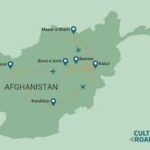
Afghanistan’s airport network is mainly managed by the Ministry of Transport and Civil Aviation. The network includes four major international airports located in Kabul, Kandahar, Herat, and Mazar-i-Sharif. In addition, there are several regional domestic airports that are currently not operational. These include Bamyan Airport, Khost Airport in south, Farah Airport, Faizabad Airport in Badakhshan, Ghazni Airport in Ghazni, Jalalabad Airport in Nangarhar, Kunduz Airport, Maimana Airport, Tarin Kot Airport, Zaranj Airport and a few others.
Major International Airports
- Kabul International Airport
Kabul International Airport (KBL), formerly known as Hamid Karzai International Airport, is located in Kabul and is the country’s main international airport. It can accommodate more than one hundred military and civilian aircraft and is operated by GAAC Holding and the Ministry of Transport and Civil Aviation.
The airport was originally named Khwaja Rawash Airport because of its location. In 1960, after the Soviet Union built a terminal and a concrete runway, it was renamed Kabul Airport. Between 2014 and 2021, it carried the name Hamid Karzai International Airport, before returning to its original name in 2021 (Wikipedia). Located at an altitude of about 1,791 meters above sea level and surrounded by the Hindu Kush mountains, the airport serves as a hub for Ariana Airlines and Kam Air.
Kabul International Airport offers domestic flights to Mazar-i-Sharif, Herat, and Kandahar. International destinations include Dubai, Istanbul, Islamabad, Jeddah, Doha, New Delhi, Tehran, Riyadh, Mashhad, Moscow, Urumqi, Tashkent, Kuwait City, and Abu Dhabi.
- Mazar-i-Sharif International Airport
Mazar-i-Sharif International Airport (MZR), officially named Mawlana Jalaluddin Mohammad Balkhi International Airport, is located about nine kilometers east of Mazar-i-Sharif, approximately fifteen minutes by road from the city center. The airport was built in the 1960s by the United States during the Cold War, at a time when political influence in the region was contested by major powers (Wikipedia). During the 1970s, air travel increased, and foreign tourists began arriving to visit the city’s historical sites. In the 1980s, the airport was heavily used by Soviet forces for military operations.
Today, it has domestic flights to Kabul operated by Ariana Airlines and Kam Air. International flights operate to Jeddah for Hajj pilgrimage and direct flights Istanbul.
- Kandahar International Airport
Ahmad Shah Baba International Airport, commonly known as Kandahar International Airport (KDH), is located in the Daman District of Kandahar Province, about seventeen kilometers southeast of Kandahar city. It is Afghanistan’s second main international airport and can accommodate up to 250 aircraft (Wikipedia). The airport was built in the early 1960s by the United States at a cost of 15 million US dollars and was completed in 1962. Its original purpose was to serve as a refueling stop for long-range aircraft traveling between Europe and Southeast Asia. With the introduction of jet aircraft, this role became less necessary.
Kandahar International Airport currently offers domestic flights to Kabul and international flights to Jeddah and Dubai. These routes (Domestic & International) are supported only by the state-owned Ariana Airlines.
- Herat International Airport
Herat International Airport (HEA), officially named Khwaja Abdullah Ansari International Airport, is located about ten kilometers southeast of Herat city in western Afghanistan. It is the country’s fourth largest international airport. Built in the 1960s by American engineers, the airport was later used by Soviet forces during the 1980s. It also served as a base for fighter and transport aircraft. Since 2005, it has been used by international and Afghan forces. Italy pledged 137 million euros for airport expansion, leading to runway improvements and the construction of a new international terminal (Wikipedia).
Herat International Airport offers domestic flights to Kabul operated by Ariana Airlines and Kam Air, as well as international flights to Jeddah mainly for Hajj pilgrimage, supported by Ariana Airlines.
Conclusion
Afghanistan’s airports have developed in response to the country’s challenging geography and historical circumstances. From the early aerodromes of the 1920s to the establishment of major international airports, aviation has remained a vital part of Afghanistan’s transportation system. Despite periods of conflict and change, the airport network continues to connect Afghan cities with each other and with important regional and international destinations.
Reference:
- www.artiklar.z-bok.se/Afghanistan-1.html
- https://en.wikipedia.org/wiki/Kabul_International_Airport
- https://en.wikipedia.org/wiki/Mawlana_Jalaluddin_Mohammad_Balkhi_International_Airport
- https://en.wikipedia.org/wiki/Kandahar_International_Airport
Let’s Go Afghanistan Team